All posts by TruckMax Marketing

The Volvo VHD: Tough Trucks for the Tougher Jobs.

VOLVO VHD 300 Axle Back

Whether you need tight maneuverability for straight-truck applications like concrete pumpers and mixers or a bridge-law compliant wheelbase for an end-dump tractor, the VHD offers the versatility to meet your needs with available axle-forward and axle-back configurations.

Tough Inside and Out

The new VHD is designed to set a new standard for vocational trucks, and that includes driver environment. Volvo Truck’s latest interior enhancements are found throughout the VHD’s cab.

Uptime

Our highly-trained uptime team manages service and schedules repairs 24/7, while our fleet management solutions provide unprecedented control over your operations.

Safety

Volvo’s commitment to safety protects your business by helping drivers avoid or minimize accidents, reducing cargo loss, downtime, and accident-related insurance costs.

Driver Productivity

The VHD offers redesigned working and living spaces, optimized to put the driver comfortably in command, maximizing productivity.

Fuel Efficiency

Innovative technology. Optimized power. Improved aerodynamics. Learn how the VHD helps you squeeze the most profit out of every drop of fuel.

Description

This Daycab provides maximum maneuverability on the jobsite, available as straight-truck or tractor in various vocational applications: Roll-Off Trucks, Concrete Mixer Trucks, Crane Trucks, Dump Trucks, Mining/Quarry Trucks, Plow Trucks, Refuse Trucks, and more.
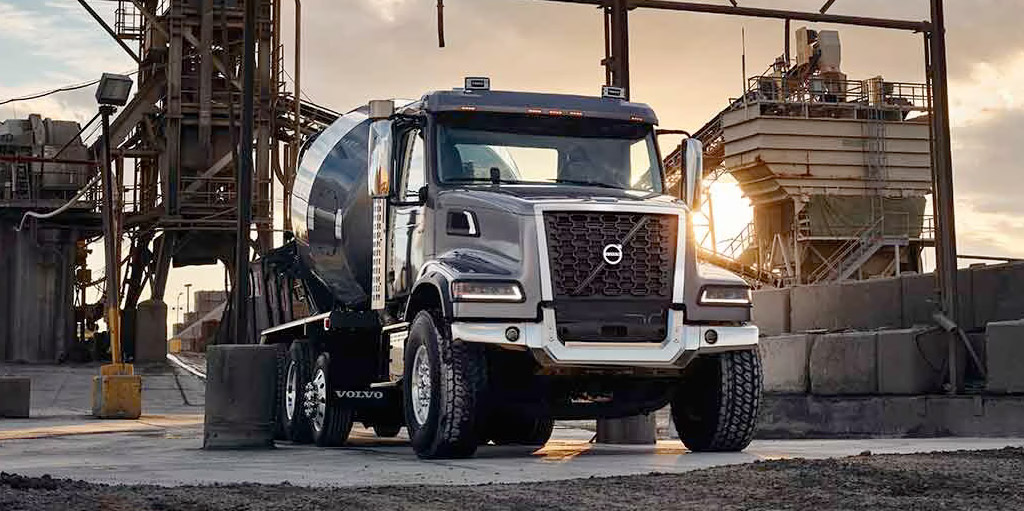
The Volvo VHD is available as straight-truck or tractor in various vocational applications: Roll-Off Trucks, Concrete Mixer Trucks, Crane Trucks, Dump Trucks, Mining/Quarry Trucks, Plow Trucks, Refuse Trucks, and more.

Engines: Volvo D11, 325-425 hp, 1,250-1,550 lb-ft. | Volvo D13, 405-500 hp, 1,450-1,850 hp lb-ft.

Transmissions: Volvo I-Shift for Severe Duty – 12 speed, Volvo I-Shift with Crawler Gears – 13, 14 speed, Alison 3000 RDS, 4000 RDS & 4500 RDS Series.

Tougher Made Smarter

The new VHD comes with Volvo Dynamic Steering (VDS), a revolutionary Volvo innovation that greatly improves performance on a job site and on the road. VDS dramatically reduces the driver’s steering effort on rough and tight job sites. The reduction of steering feedback from the road enables drivers to navigate with ease.

The VHD’s highly flexible body builder module is designed so the interface between the truck and body behaves reliably. It helps troubleshoot issues between the truck and body by communicating fault codes. 

The new Volvo VHD combines power and advanced technology, achieving the engineering team’s original goal—set a new standard for vocational trucks. With the new design, the VHD is now the best looking vocational vehicle available, while the innovations found throughout the truck make it much more than eye candy.

Contact one of the TruckMax specialists to learn more about the all new Volvo VHD.
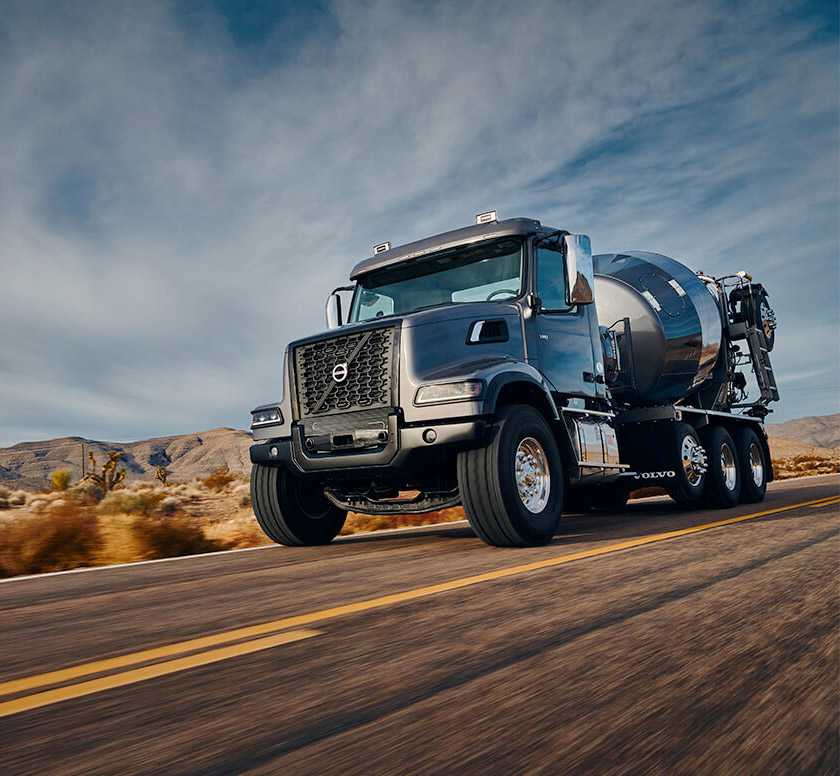
The new Volvo VHD combines power and advanced technology, achieving the engineering team’s original goal with the new design.

Getting a Tax Deduction for Buying a commercial vehicle.

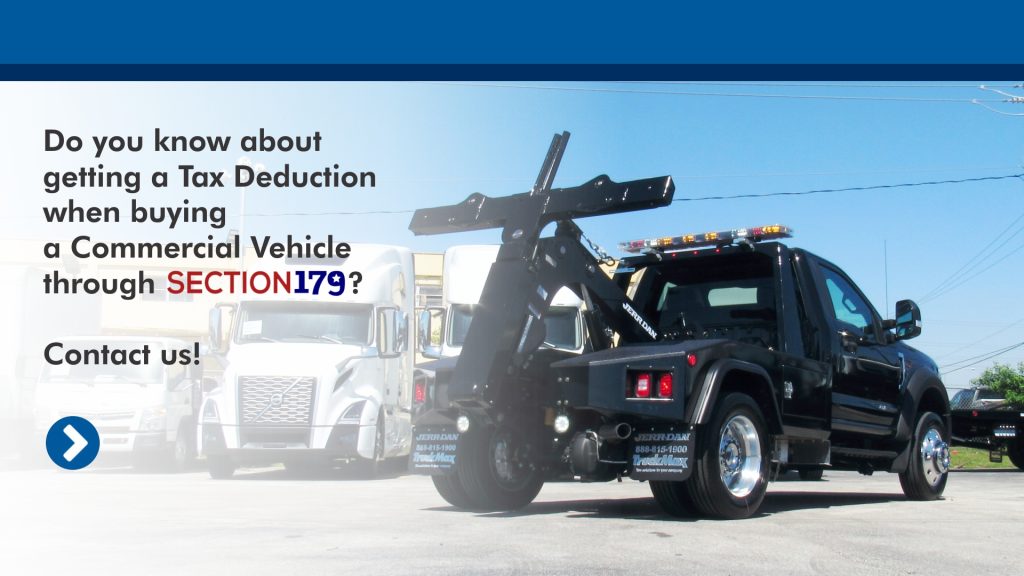
You can get a tax benefit from buying a new or “new to you” car or truck for your business by taking a section 179 deduction. This special deduction allows you to deduct a big part of the entire cost of the vehicle in the first year you use it if you are using it primarily for business purposes. 

A section 179 deduction is a special kind of tax deduction that businesses can take to reduce expenses. You can elect to take this deduction on the cost of certain types of business property. including business vehicles, instead of (or in addition to) recovering the cost by depreciating the property.

To qualify for a section 179 deduction for a business vehicle, it must be bought and put into service during the year in which you are applying for the section 179 deduction. Being placed in service means that a business asset is ready and available for specific use in a business or for the production of income.

In addition, the vehicle:

Check out our commercial truck inventory

section 179 commercial vehicle

Want to know the details?

The most important qualification for section 179 deduction purposes is business use. You can only take a section 179 deduction for vehicles used more than 50% of the time for business purposes. The deduction is limited to the amount of use and can’t be taken on personal use.

Section 179 deductions work like depreciation. The purpose of depreciation is to spread the expense (and tax deductions) of owning a business asset like a car or truck over the life of that asset.

Normally, depreciation is deducted as an expense to the business over the life of the equipment or vehicle. But a section 179 deduction allows you to take more of the expense of the purchase in the first year.

There are two limits on the amount you can elect to deduction under section 179.

Dollar Limits. The total amount you can take as section 179 deductions for most property (including vehicles) placed in service in a specific year can’t be more than $1 million. In other words, all section 179 deductions for all business property for a year can’t be greater than $1 million. The dollar amount is adjusted each year for inflation. There is also a “phase-out” limit of $2.5 million.

in addition to the general dollar limits, the maximum section 179 expense deduction for sport utility vehicles placed in service in tax years beginning in 2019 is $25,500, based on a specific IRS description of the vehicle type.

Business Income Limit. After you apply the dollar limit, the total cost you can deduct each year – including section 179 deductions – is limited to the taxable income from your business during that year. In other words, you can’t use a section 179 deduction to cause your business to have a loss. If you can’t take all or part of a section 179 deduction in one year, you can carry it over to the next year.

The calculation for this limit is complicated and it’s different for each business. See the instructions for IRS Publication 946 for type of vehicle and further details.

How to Take the Deduction

You or your tax preparer will need to complete IRS Form 4562 Depreciation and Amortization. Follow the instructions for Part I.

Key Requirements and Restrictions

Contact us to learn more about what your chances are by using Section 179 for your business.

Isuzu Updates F-Series, Adds Class 7 Model

Isuzu Commercial Truck of America announced the Cummins B6.7 diesel engine will now be featured in the new 2022 Isuzu F-Series trucks for the U.S. and Canadian markets. This is the first product to come to market globally from the Isuzu Cummins Powertrain Partnership (ICPP) between Isuzu Motors Limited and Cummins Inc. that was formed in 2019.

The 2022 F-Series will be available in two medium-duty models – the Class 6 FTR (25,950-pound GVWR) and the Class 7 FVR (33,000-pound GVWR). Additionally, the lineup will include a de-rated Class 6 FVR. A total of eight wheelbases will be available for the FTR and FVR models.

The low-cab forward’s larger cab-to-axle space provides the Isuzu F-Series more cargo capacity versus conventional cab competitors with a comparable wheelbase, Isuzu officials said in a press release. This gives customers more versatility with their body application choices to accommodate heavier or more spacious cargo loads.

The FTR and FVR offer a 50-degree inner wheel cut that gives the Isuzu F-Series turning diameters between 43.7-foot (152-inch WB) and 65-foot (248-inch WB). Greater visibility is made possible by Isuzu’s low cab forward-designed cab and new LED headlamps, company officials said. The new interior design has dual-tone trim and enhanced seating.

The Cummins B6.7 is mated to an automatic 6-speed Allison RDS Transmission (2500 Series). With 260 hp and 660 lb-ft of torque, this is the highest horsepower and torque available from the Cummins B6.7.

This power increase in the Isuzu F-Series will easily move heavier payloads through today’s urban environments and over the road between distribution centers, according to the truckmaker.